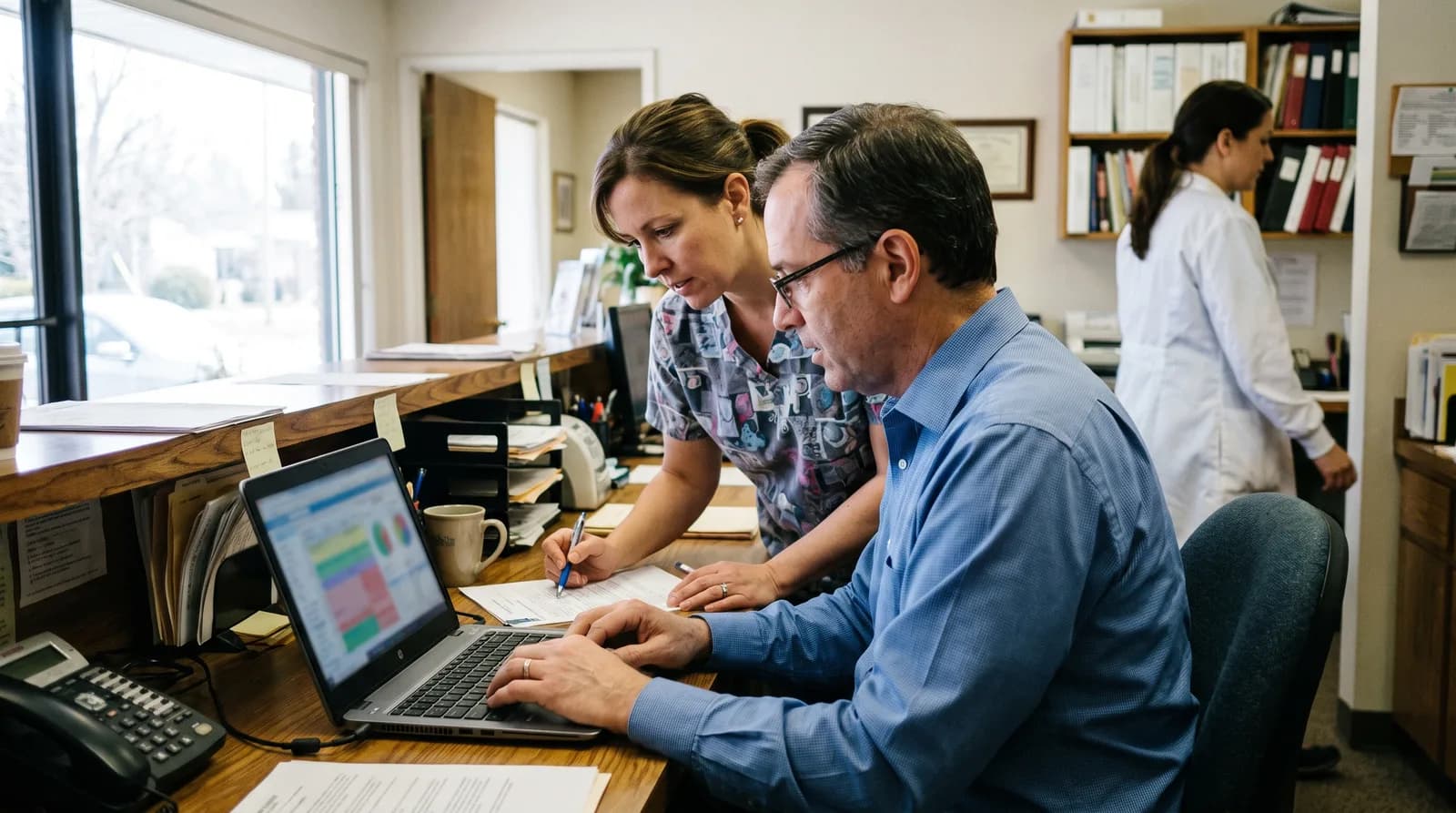
DentiVoice: Automated Dental Recall and Follow-Up Calls
How DentiVoice handles recall, reactivation, and post-visit follow-up calls automatically. Setup, PMS integration, and what it books.
Share:
Table of contents
Why Outbound Patient Communication Matters More Than Ever
Automated dental patient follow-up matters more than ever because the patients who already trust your practice are the easiest revenue to recover. DentiVoice now handles this automatically, calling no-shows, overdue recalls, and lapsed patients so your front desk does not have to.
Most dental practices invest heavily in attracting new patients. They run Google Ads, build referral programs, and optimize their websites. But the patients who have already walked through your doors and then quietly drifted away represent a revenue source that is far easier and cheaper to recapture.
For the fundamentals of setting this up correctly, our complete guide to automated patient follow-up covers the four core follow-up types and how to sequence them.
The numbers tell a clear story. The average dental practice has 20 to 30 percent of its active patient base overdue for hygiene, restorative work, or scheduled treatment. No-show rates across dentistry average 10 to 15 percent. Each empty chair from a missed appointment costs your practice between $150 and $300 in lost production. Over a month, those gaps add up to thousands of dollars walking out the door.
Yet most practices still rely on front desk staff to handle follow-up calls between check-ins, insurance verifications, and incoming phone traffic. The result is inconsistent outreach, missed opportunities, and burnout. That is exactly the problem DentalBase set out to solve with the latest expansion of DentiVoice.
Related: New to DentiVoice? Start with the full overview of its inbound and outbound capabilities. → DentalBase AI Receptionist: Complete Guide
What Does the National Data Say About Overdue Patients and Lost Production?
Independent research confirms this is not a small, practice-specific problem. Overdue and no-show patients are one of dentistry's largest controllable revenue leaks.
60%
of working-age adults (19, 64) did not have a dental visit in the past 12 months, per ADA Health Policy Institute data.
$45.9B
lost annually to reduced productivity from untreated tooth decay, per NIDCR's Oral Health in America report.
2M+
ER visits happen yearly for dental problems routine follow-up could often catch earlier, per CDC data.
$20K, $70K
is the estimated yearly loss from just one no-show per day, per Dental Economics.
Most practices carry a bigger overdue list than they realize. Closing that gap consistently is exactly what DentalBase's dental practice growth and AI receptionist services are built to do.
The Hidden Cost of Manual Follow-Up in Dental Practices
Your front desk team is the heartbeat of your practice. They greet patients, handle insurance questions, manage the schedule, and answer a constant stream of phone calls. Somewhere between all of that, they are also expected to call yesterday's no-shows, reach out to patients who are six months overdue, and follow up on unscheduled treatment plans.
Each of those manual follow-up calls takes 3 to 5 minutes when you account for dialing, waiting, leaving voicemails, and documenting the outcome. For a practice with a full schedule, front desk staff can easily spend 2 to 3 hours every day on callbacks alone. That translates to 10 to 15 hours per week, time that could be spent on patient experience, treatment coordination, or simply reducing daily stress.
The Staff Time Problem
At 3 to 5 minutes per call and dozens of patients to reach each day, front desk teams spend 10 to 15 hours per week on outbound callbacks. That is the equivalent of hiring a part-time employee just to make phone calls.
The bigger issue is consistency. When things get busy, follow-up calls are the first task to fall off the list. A patient who missed their cleaning in January may not hear from your office until April, if at all. By then, they may have found another provider or simply lost motivation to return. Manual processes create gaps, and those gaps quietly erode your patient base over time.
What Does Manual Follow-Up Actually Cost in Payroll Hours?
The Bureau of Labor Statistics puts the median wage for dental support staff at $47,300 a year, so every hour spent on callbacks is a real payroll cost, not busy work.
- 10 to 15 hours a week of callback time carries real payroll dollars, per BLS wage data.
- That time is also opportunity cost: an hour redialing a no-show is an hour not spent on the patients already in the building.
- Automation redirects staff hours toward exceptions that still need a human touch.
How DentiVoice Automates Missed Appointment Follow-Up
When a patient does not show up for their appointment, the clock starts ticking. The longer you wait to reach out, the less likely that patient is to reschedule. Research shows that contact within the first 24 hours dramatically increases the chance of rebooking.
DentiVoice now detects missed appointments directly from your practice management system, whether you run Dentrix, Open Dental, Eaglesoft, or Curve Dental. Once a no-show is flagged, the system automatically places an outbound call to the patient. The AI delivers a friendly, natural-sounding message that acknowledges the missed visit and offers to reschedule on the spot.
How the No-Show Recovery Workflow Operates
1 | Missed Appointment Detected DentiVoice syncs with your PMS and identifies patients who did not check in for their scheduled visit. |
2 | Automated Outbound Call Within your configured timeframe, DentiVoice places a call using a warm, conversational tone personalized with the patient's name and appointment details. |
3 | Rescheduling or Voicemail If the patient answers, DentiVoice can book a new appointment in real time. If the call goes to voicemail, it leaves a brief, professional message with callback instructions. |
4 | Follow-Up Sequence If the patient does not respond to the first attempt, DentiVoice follows a configurable retry schedule, spacing calls appropriately to avoid being intrusive. |
This is not a generic robocall. DentiVoice uses context from your schedule to personalize each interaction. Patients hear their name, the type of appointment they missed, and available times that work for your practice. The experience feels like a call from your own team, not a machine.
Does DentiVoice Replace Your Practice Management System?
No, DentiVoice does not replace your PMS; it reads from and writes back to it, keeping appointment status and recall dates accurate without manual re-entry.
- Dentrix, real-time appointment and recall sync
- Open Dental, two-way schedule updates
- Eaglesoft, automatic no-show and recall flagging
- Curve Dental, cloud-based scheduling sync
For the full technical breakdown of how the connection works, see the DentiVoice PMS integration guide.
Related: Want a deeper look at reducing missed appointments? → How to Reduce No-Shows in Your Dental Practice (2026)
Patient Reactivation: Bringing Overdue Patients Back to Your Practice
Every dental practice has a long list of patients who were once active but have not been seen in 6, 12, or even 18 months. These are patients who already trust you. They have been in your chair before. They just need a reason, and a nudge, to come back.
For the exact talk track and outreach cadence, see our dental patient reactivation calls script and schedule.
Reactivating a lapsed patient costs 5 to 7 times less than acquiring a new one. Think about what your practice spends on marketing to attract a single new patient through Google Ads or direct mail. Now compare that to the cost of a single phone call to someone who already knows your name, your team, and the quality of care you provide. The math is clear.
Reactivation vs. New Patient Acquisition
Bringing back a lapsed patient costs 5 to 7 times less than acquiring a new one. With 20 to 30 percent of the average patient base overdue for care, reactivation is one of the highest-ROI activities a dental practice can pursue.
DentiVoice identifies overdue patients by syncing with your practice management software and cross-referencing appointment history. You set the criteria: patients who have not visited in 6 months, 12 months, or any interval you choose. The system then initiates a series of outbound calls designed to re-engage those patients with a personal touch.
Practices that implement automated recall and reactivation programs see a 15 to 25 percent improvement in reactivation rates. For a practice with 2,000 active patients, that could mean dozens of returning patients every month, each bringing hygiene visits, outstanding treatment plans, and long-term loyalty back through your doors.
Related: Learn the full strategy behind AI-powered patient reactivation campaigns. → AI Dental Patient Reactivation: Complete Guide
See How DentiVoice Reactivates Your Overdue Patients
Get a personalized walkthrough of the outbound calling features for your practice.
Book a Free DemoHow Many Patients Are Actually Overdue? What the Research Shows
More than most practices assume. As the national data above shows, a majority of working-age adults go a full year without a visit, so the "lapsed" list is usually larger and more valuable than the schedule alone suggests.
Three groups typically make up an overdue list:
- Recently lapsed patients, six to twelve months overdue and usually cheapest to bring back.
- Treatment-plan dropouts, patients who accepted a plan but never scheduled the next phase.
DentalBase's automated dental patient reactivation calls feature segments these groups automatically.
Recall Reminders That Actually Get Answered
For years, dental practices have relied on text messages and email blasts to remind patients about upcoming hygiene appointments and overdue recalls. These channels were effective at first, but response rates have been declining steadily. Patients are overwhelmed by digital notifications. Text messages from businesses get ignored or filtered. Emails land in promotions tabs or spam folders.
For a full comparison of the two channels, see our analysis of outbound recall calls versus SMS for dental practices.
Phone calls still stand apart. When a patient sees an incoming call from their dentist's office, the engagement rate is meaningfully higher than a text or email. A live voice, even an AI-powered one, creates a sense of urgency and personal connection that a typed message cannot replicate. Patients are more likely to answer, more likely to engage in conversation, and more likely to commit to an appointment on the spot.
Why Text and Email Alone Are Not Enough
- Text message open rates for business communications have been declining year over year.
- Email recall reminders often land in spam or are ignored among dozens of daily promotions.
- Neither channel allows real-time conversation, objection handling, or immediate scheduling.
- Phone calls allow DentiVoice to answer questions, address concerns, and book appointments in a single interaction.
DentiVoice handles recall reminders by phone at scale. The system pulls recall due dates from your PMS and begins outreach at the interval you specify, whether that is two weeks before the due date or the day after a patient becomes overdue. If the patient answers, DentiVoice can check availability and confirm an appointment right then. If not, it leaves a clear voicemail and retries according to your preferred cadence.
This does not mean you should abandon text and email entirely. The strongest recall strategies use multiple channels together. But adding automated phone outreach fills the gap that digital-only approaches leave open, and it is the channel most likely to result in a booked appointment.
Why Do Phone Calls Outperform Text and Email for Recall?
Phone calls outperform text and email because they allow real-time conversation. A text can only remind; a call can answer a question and confirm a booking before the patient closes the app and forgets.
- Objection handling happens live. If a patient hesitates over cost or timing, the conversation can address it on the spot instead of ending in a deleted notification.
- Calls carry urgency a text cannot. A ringing phone from the dentist's office gets noticed in a way a batch text blast does not.
- Booking closes the loop immediately. There is no "I'll do it later" step between hearing the reminder and having an appointment on the calendar.
For the full channel-by-channel breakdown, see the best follow-up channel for dental practices.
Related: A step-by-step guide to building a follow-up call workflow for your practice. → How to Automate Dental Follow-Up Calls: Complete Guide
Post-Treatment Follow-Up: Closing the Care Loop
Outbound communication is not just about filling chairs. It is also about patient care. After procedures like extractions, implant placements, or periodontal treatments, a quick follow-up call can make a meaningful difference in patient satisfaction and clinical outcomes.
DentiVoice can be configured to place post-treatment check-in calls at intervals you define. A patient who had a crown placed on Tuesday might receive a call on Thursday asking how they are feeling, whether they have any questions, and reminding them of aftercare instructions. If the patient reports a concern, the system flags it for your clinical team to review.
These calls accomplish two things at once. First, they demonstrate that your practice cares about outcomes beyond the appointment itself. That kind of attention builds loyalty and generates word-of-mouth referrals. Second, they catch potential complications early, before a minor issue becomes an emergency call or a negative review.
For practices focused on case acceptance and treatment follow-through, post-treatment outreach also serves as a natural touchpoint to discuss next steps. If a patient completed phase one of a treatment plan, DentiVoice can prompt them to schedule phase two, keeping complex cases on track without burdening your clinical coordinators.
What Should a Post-Treatment Check-In Actually Cover?
A good post-treatment call covers four things in under two minutes: comfort level, aftercare understanding, early complication flags, and the next scheduled step.
- Comfort check: is pain and swelling within the range the clinical team expects for that procedure?
- Aftercare confirmation: does the patient remember and understand the instructions they were given at checkout?
- Early flagging: anything outside the expected range gets routed to the clinical team the same day, not discovered at the next visit.
- Next-step nudge: if a treatment plan has a phase two, the call is a natural moment to get it on the schedule.
This is the same logic that underlies DentalBase's broader step-by-step guide to building a dental patient follow-up system: define the trigger, define the owner, define the stop rule.
Want to See the Full Outbound Feature Set?
Schedule a walkthrough and see how DentiVoice handles follow-up, recall, reactivation, and post-treatment calls for your practice.
Book a Demo →What This Means for Dental Practice Revenue and Retention
The financial impact of consistent outbound communication compounds quickly. Consider a mid-sized practice that sees 15 no-shows per month. At an average of $200 in lost production per missed appointment, that is $3,000 per month, or $36,000 per year, walking out the door. Even recovering a portion of those appointments through automated dental patient follow-up can add meaningful revenue back to the bottom line.
Now layer in patient reactivation. If your practice has 2,500 patients on file and 25 percent are overdue, that is 625 patients who could be generating hygiene visits, accepting treatment plans, and referring friends and family. Recovering even 15 to 20 percent of that group puts dozens of patients back on the schedule each quarter.
Revenue Recovery at a Glance
15 no-shows per month at $200 each equals $36,000 in annual lost production. Automated follow-up that recovers even 30 percent of those appointments brings back over $10,000 per year, before accounting for reactivation and recall gains.
Beyond revenue, there is the retention effect. Patients who hear from your practice regularly are less likely to drift to a competitor. They feel remembered. They feel valued. And when the time comes for a major treatment decision, they are more likely to say yes to the provider who has stayed in touch, not the one they have not heard from in a year.
The operational savings matter too. Freeing up 10 to 15 hours of staff time per week does not just reduce stress. It allows your team to focus on in-office patient experience, insurance coordination, treatment plan presentations, and the kind of personal interactions that no AI can replace. Automation handles the repetitive outreach so your people can do what they do best.
How Do These National Numbers Show Up in Your Own Practice?
They show up as a wider gap between production booked and possible. A mid-sized practice is likely leaving five or six figures of preventable production on the table each year.
Track these numbers directly rather than relying on national averages alone:
- No-show rate as a share of scheduled appointments, tracked monthly.
- Reactivation rate, the share of lapsed patients who return within a quarter of contact.
See the four follow-up metrics that matter and the ROI of dental patient follow-up for a worked example.
How Do You Get Started With Automated Dental Patient Follow-Up?
Getting started with automated dental patient follow-up takes three steps: connect DentiVoice to your PMS, set the triggers and cadence for each call type, and review the first batch of booked appointments before scaling it across your full patient list.
- Connect your PMS. Link Dentrix, Open Dental, Eaglesoft, or Curve Dental so DentiVoice can read appointment status and recall dates in real time.
- Set your triggers and cadence. Decide when a no-show call goes out, how far ahead recall outreach starts, and how many retry attempts each sequence allows.
- Review and scale. Check the first week of booked appointments and voicemail outcomes, then expand automated dental patient follow-up to your full overdue and no-show list.
Ready to Stop Losing Patients to Silence?
See how DentiVoice outbound features can recover no-shows, reactivate overdue patients, and automate recall for your dental practice.
Book a Free Demo →Related Reading
- For the full breakdown of how automated follow-up systems work end to end: the complete guide to automated patient follow-up for dental practices →
- Reactivation campaigns work best when paired with a proven calling script and follow-up timeline: a reactivation call script and schedule for lapsed patients →
- Recall is one of the highest-volume workflows this update automates: how outbound recall calls stack up against SMS reminders →
Explore more guides and tools for dental practice growth.
Browse ResourcesSources & References
- The Dental Care Market | American Dental Association Health Policy Institute
- Oral Health in America - Section 3A Summary | NIDCR
- Preventing Oral Diseases and Conditions in Communities | CDC
- The Economic Impact of No-Shows on Dental Practices | Dental Economics
- Dental Assistants - Occupational Outlook Handbook | U.S. Bureau of Labor Statistics
Frequently Asked Questions
DentiVoice connects to your practice management system and monitors for missed appointments, overdue recalls, and completed treatments. When a trigger event occurs, such as a no-show or a recall due date, the system automatically places an outbound call to the patient. The AI uses the patient's name, appointment details, and your practice's available times to have a natural conversation and, when possible, book an appointment in real time.
DentiVoice currently integrates with Dentrix, Open Dental, Eaglesoft, and Curve Dental. These integrations allow real-time data syncing so that appointment changes, patient records, and recall schedules stay up to date without manual input from your team.
DentiVoice is designed to sound natural and conversational. However, DentalBase follows transparency best practices. Your practice can configure the greeting and disclosure language to meet your preferences and any applicable regulations. Most patients respond positively because the experience is helpful and efficient.
Based on industry benchmarks and practice feedback, most offices save 10 to 15 staff hours per week by automating follow-up, recall, and reactivation calls. The actual number depends on your patient volume and how much manual outreach your team currently handles. For many practices, this is equivalent to freeing up a part-time team member.
Yes. You have full control over call timing, frequency, and retry logic. You can set DentiVoice to call no-shows within hours of a missed appointment, begin recall outreach two weeks before a due date, or space reactivation attempts across several weeks. All of these parameters are configurable through the DentalBase dashboard.
Was this article helpful?
Written by
Dentalbase Team
The Dentalbase Team is a collective of dental marketing experts, AI developers, and practice management consultants dedicated to helping dental practices thrive in the digital age.